Fixed assets and depreciation
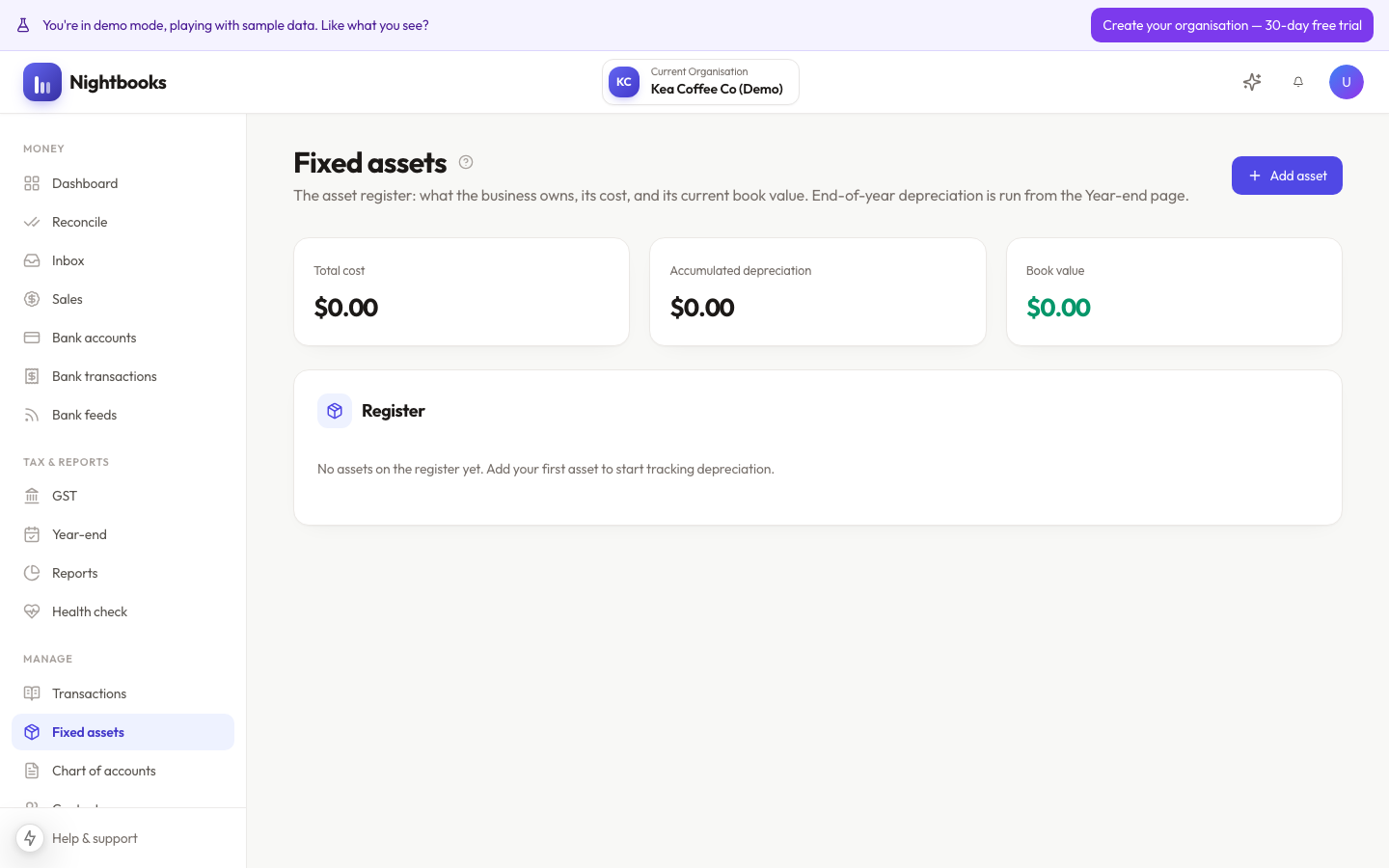
Assets that last more than a year — vehicles, equipment, computers, furniture — are capitalised and depreciated rather than expensed. You claim their cost over their useful life instead of all at once.
Registering an asset
Record the cost (GST-exclusive if you are registered), purchase date, and a description.
Choose the depreciation method: diminishing value (bigger deductions early) or straight line (even deductions), using IRD’s published rates for the asset type.
Book value then updates automatically as depreciation posts.
The low-value exception
Assets costing $1,000 or less (GST-exclusive) can be expensed immediately rather than capitalised — most small purchases never need to touch the asset register at all.
The annual run
Depreciation posts once per year from the Year-end page. Nightbooks previews the full run — each asset, its method, rate and the year’s depreciation — before anything is written to the ledger. The expense lands in your P&L and each asset’s book value steps down accordingly.
Selling or disposing of an asset
When an asset is sold or scrapped, the difference between sale price and book value becomes depreciation recovered (income) or a loss on disposal. Record the disposal against the asset so the register and the ledger stay in step.
Was this article helpful?